


 Today we decided to drive up to Grantham where there is an excellent Saturday Market. We have been there before, and were looking forward to buying some meat from the character we had met last time. He is a real salesman - and we bought a bag of Lamb Chops plus a Leg of Lamb for L10 and the a bloody great bag of chicken breast for another tenner! Enough meat to last a month. Also some great meusli and herbs,vegetables and fruit, and then had a stand up lunch of Paella from a Spanish kiosk.
Then we went about the business of National Trusting and took off for Belton House, another country house set in magnificent park like grounds. In the entrance we were just in time to hear an introduction to the property by one of the volunteer guides. This is the first time that we have struck a presentation of a Trust property and it was fascinating. The House was built in the 17th century by a London lawyer Sir John Brownlow who, apparently was earning a sum of 6000 pounds a year in his job - a sum which translates into millions in todays terms. He wisely decided to buy some land and build a family home - and thus we have this magnificent country house which remained in the family until 1984 when the current Lord Brownlow gave the place to the National Trust.
The house is totally open to view and as the guide suggested, it does represent a very liveable family home, albeit of fairly generous proportions!! As is typical of these old country houses the bathroom facilities were limited, but, as personal hygiene was not a major daily consideration until the early 20th century, the lack of toilets and baths was to be expected.The gardens and parkland surrounding the house were more desirable features and truly beautiful.
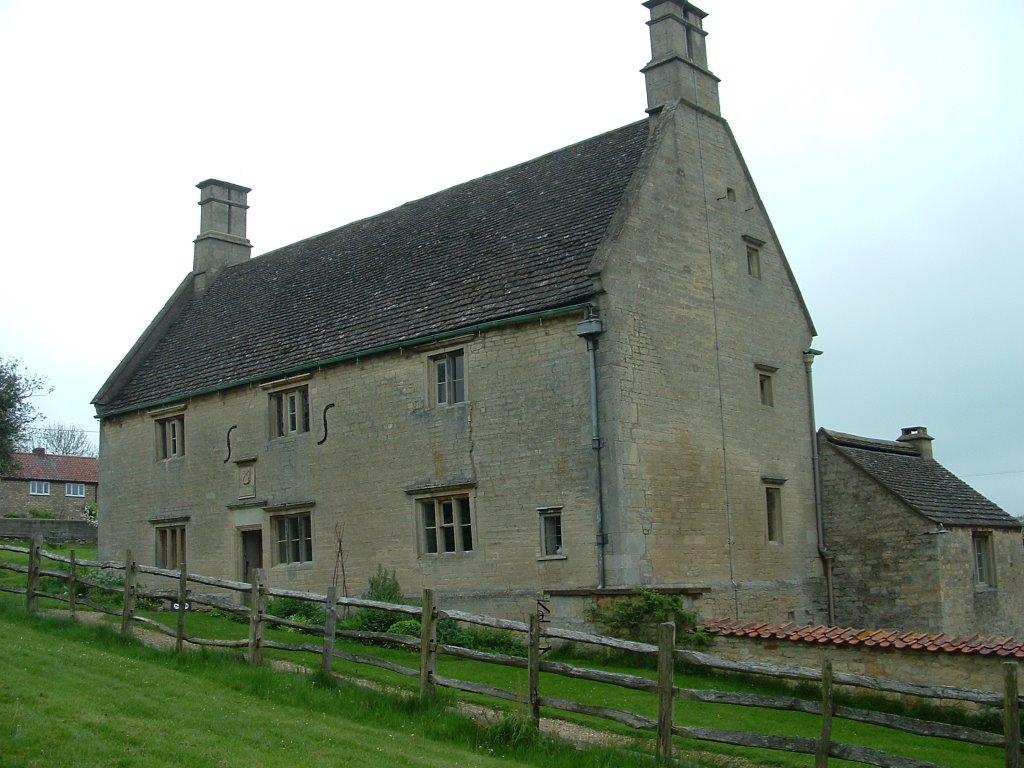
We left Belton and drove off to find Woolsthorpe Manor which was the birthplace of Sir Isaac Newton - the bloke who sat under the apple tree and discovered gravity. He was born here on Christmas Day in 1642. He was fortunate in having an Uncle who, recognising his intelligence, persuaded his mother to send him to Cambridge University -otherwise he would probably have finished up as another sheep farmer.He left Cambridge temporarily when the Plague hit that City and it was during the next two years while living at Woolsthorpe that his creative genius developed.He developed Calculus/reflective telescope/theory of gravity and laws of motion and thoeries on light over the next few years before returning to Cambridge to a teaching/research career.
The house itself is evidence of the fairly comfortable circumstances in which he lived, and is well maintained in as much originality as possible. Adjoining the house is an orchard where the actual apple tree still grows despite having grafted new limbs to an ancient trunk.There is also a Science Discovery building which houses a really super hands on array of exhibits portraying Newtons basic discoveries. The supervisor there (we were the only patrons) adopted us to demonstrate the various exhibits,but I have to confess that his explanation of calculus was "in one ear and t'other'!!But I did understand the experiment with light rays and found that by blocking one colour from white light the other colours appear -so there!


 We took advantage of our National Trust Membership this weekend to visit Waddesdon, an impressive country estate just outside Aylesbury about 70 miles away. We took Ed Jay our Canadian teacher who lives in Flat One with us.
The estate was created by Baron Ferdinand de Rothschild in the 19th century and he filled the Renaissance style Chateau with the best collectio n of 18th century French art including paintings,furniture,carpets and curiosities in the world. It is an incredible display of wealth and makes one understand how the French Revolution occurred!!
Added to this is the beautiful garden and surrounds, with fountains and statuary abounding and an aviary which houses many exotic birds some of which are endangered species.
The whole place is open for sightseeing, and contains room after room of exhibits and memorabillia of the family which is most interesting.There is a wine cellar contining vintages from the Rothschild Estates in France, and the wines are for sale. Carol did not respond to my suggestion that we buy a bottle of 1978 Claret at L550 - the thought of popping the cork of something at $200 a glass was too much!
When we got back to Ramsey we found that it had been raining all day while a mere 70 miles away we were wandering around the magnificent gardens in sunshine.




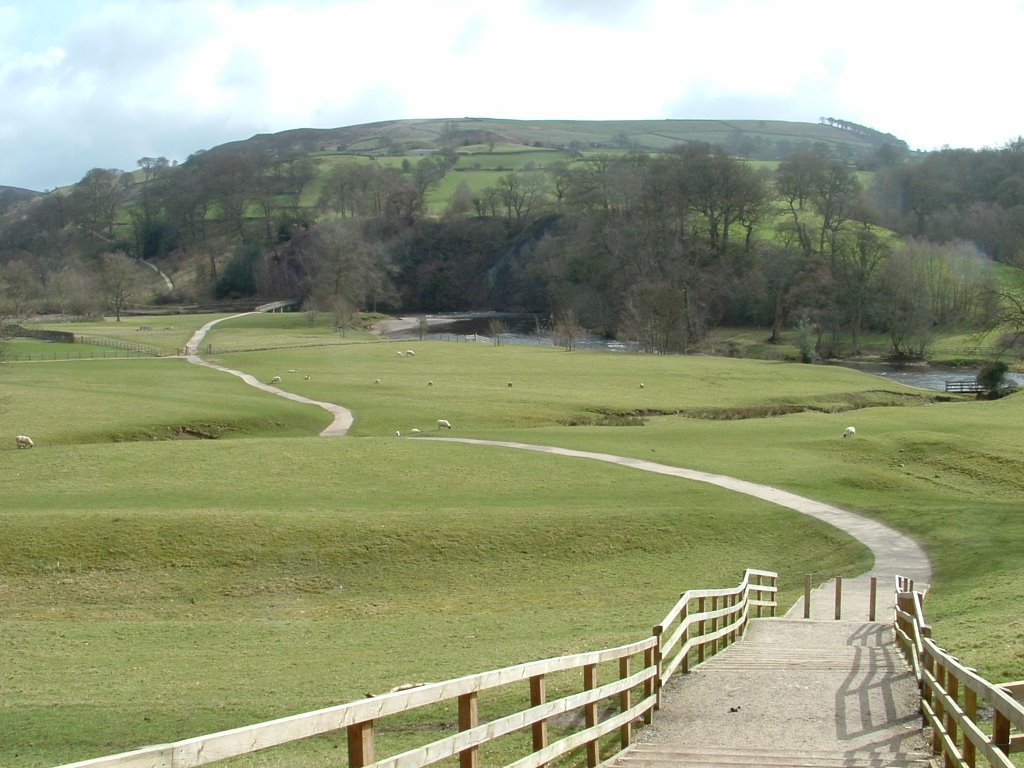

Bolton Abbey gives it's name to a pretty hamlet which is the home of the Duke of Devonshire. The remains of a 12th century Priory Church are the ccentrepiece of a beautiful piece of countryside and the river Wharfe which winds throughout. Pictures immediately above.As seems to be the norm, the Priory was partially demolished in the reign of Hentry VIII but some parts were saved, and ultimately a place of worship continued and has been used for over 800 years. Carol bought me a new Pommie cap from the shop here - very smart.
We then drove through some lovely country lanes and ended up at Grassington where we managed to park the car in one of the narrow streets. Carol had a local paper and saw an advertisment for the local b utcher selling Yorkshire beef - so of course we had to find his shop and inspect the goods. The steak looked great, so we bought two sirloins to have that night. I also bought a pork pie to supplement my packaged Ploughmans lunch, and it was the bst pork pie I have ever tasted.
Next was a visit to Fountains Abbey a National Trust site. In the 12th century a group of dissident Benedictine monks left York wishing to pursue a life of greater austerity! They were led to a wild wasteland in the narrow valley of the River Skell. After much hardship considerable wealth was provided by great Northern families and the Fountains became one of the most powerful religious houses in the north of England.
Subsequently the abbey and all it's possessions were surrendered to the King and the place fell into disrepair - a familiar story.But the National Trust have maintained the Studley Royal Water Garden which is a pleasant walk from the old ruins, and presents a delightful setting of formal lakes with classical statues and temples in the surrounding gardens. And so home to our steaks which were superb.
The last day involved driving to Malham and after driving up Malham Tarn - a narrow road up to the top at 370 metres- we parked the car and walked to Malham Cover. This cove is a limestone cliff face which originally was a mighty waterfall. On the way to the site we stopped at a group of bird watchers, who, complete with telescopes, were inviting people to observe birds. Out of eyesight, but caught by the telescope we saw a small owl happily resting in a tree and then a magnificent Kestrel sitting on a rock oblivious to the observation. The top photos sow the Cove and the surrounding hillside with the everpresent stone walls.
We drove home through miles of stone fences and fields with dozens of sheep and newborn lambs and stopped at Settle to have lunch at the Royal Hotel - a lovely old hotel which served excellent salads at a most reasonable price.


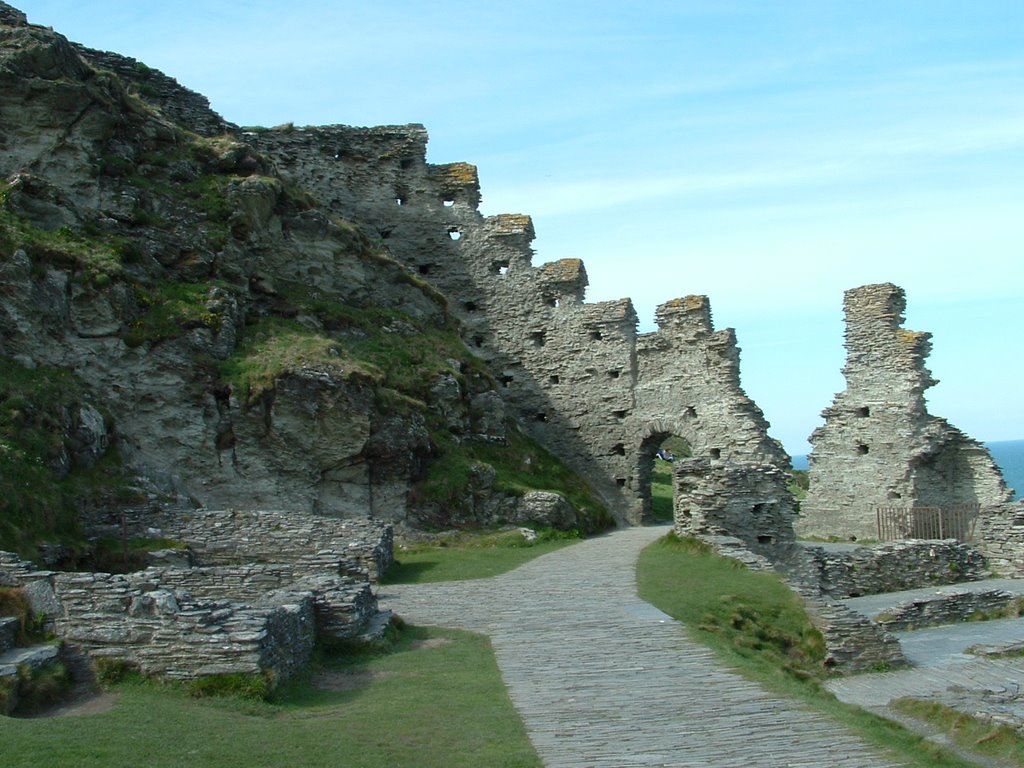 Still can't get these pictures in the right place - butthat's life! The ones above and below are of Tintagel Castle on the North Cornish coast - the legendary home of King Arthur. Amazing ruins and a test of fitness to climb up the many steps to get ot the top. The coast line here all tall rocky cliffs and while the sea was fairly quiet while we were there one can easily imagine the dangers to ships during storms - lots of shipwrecks around here.
  On the way over to Tintagel we called into Launceston which funnily enough is on the River Tamar. We wanted to have a look at the castle there, b ut had trouble getting a parking spot, and then Carol spotted a sign which advertised the Tamar Otter Farm and indicated that the otters were fed each day at 12 noon. So we high tailed it to the farm and spent a most interesting hour or so hearing about the life of Otters and seeing several Asisan otters and British otters in their pens. Feeding time allowed us to get a better view of these lovely little creatures, which although friendly looking,were, according to the keeper, not to be petted as they would quickly bite of a finger! I managed to get a good shot of devouring apiece of raw fish - it disappeared in seconds - the fish I mean!
 At the park there were also a n umber of Peacocks/geese and wallabies roaming around.
 Wednesday was spent visiting Fowey/Polperro and Looe -all charming fishing villages with incredibly narrow streets. I drove down one with some trepidation uncertain as to whether it was one way or not, and stopped to ask a bloke if it was OK to go down - he said "Yes mate - but hurry as there is no one coming ujp at the moment"


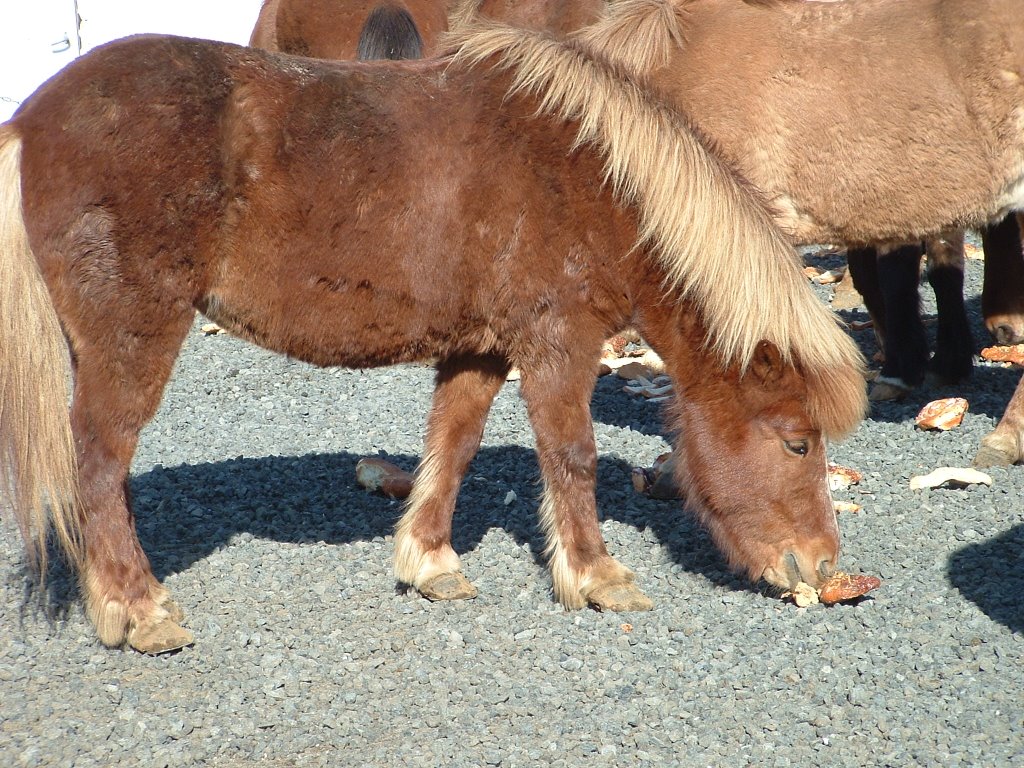

Above is a picture of an Iceland Horse -while looking like a Shetland, this breed is home grown and a remarkably strong animal. It can easily carry two people (as long as their legs are not too long!) and they survive the climate becaue of their long thick shaggy coats.
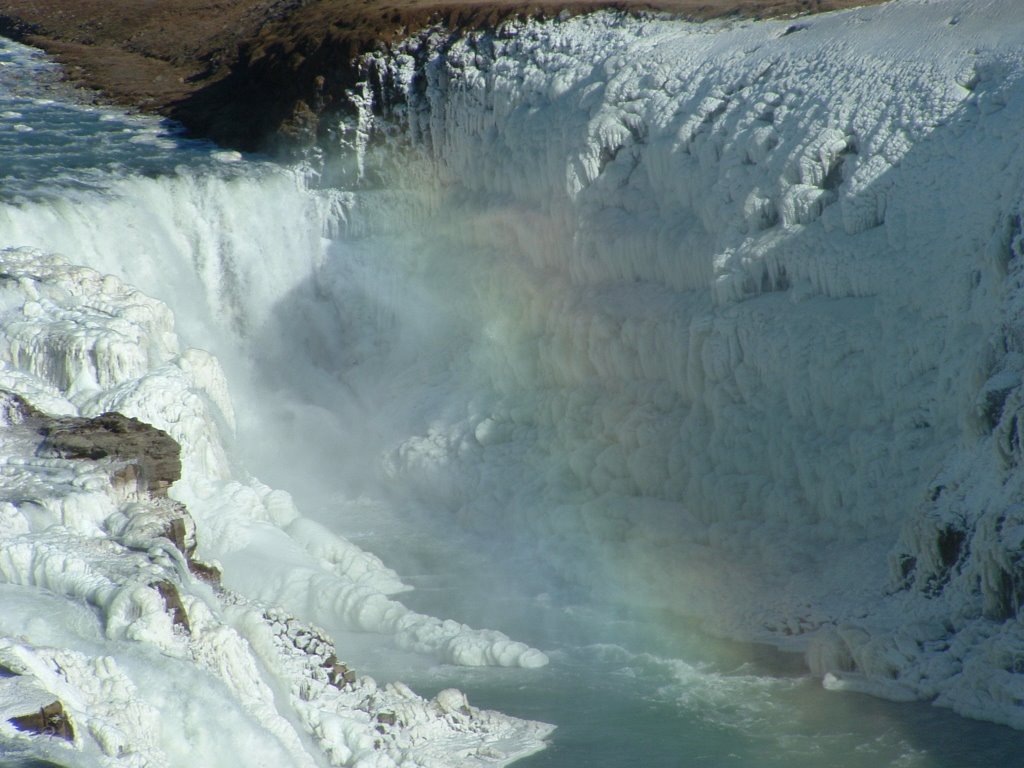
Next to it is another photo of the Gulfoss waterfall which although partly frozen is still a most spectacular sight. At the right is a picture of the Horses Main waterfall and you can see that a salmon ladder has been constructed at the left hand side of the falls. This was the first attempt to build such a structure and it was unsuccessful for two reasons. It did not have the right inclination for one and there were no salmon in the river either!! Carol was unfortunately sick in the bus shortly after this which was a bit embarrassing for her, but the driver was up to the task and cleaned everything up with no fuss. Not sure what caused this, but while she felt it was the carrot cake she had eaten at Gulfoss, our lovey guesthouse lady told us later that a virus was going around which seemed to only last for 4 hours -and certainly Carol had no ill effects the next day.
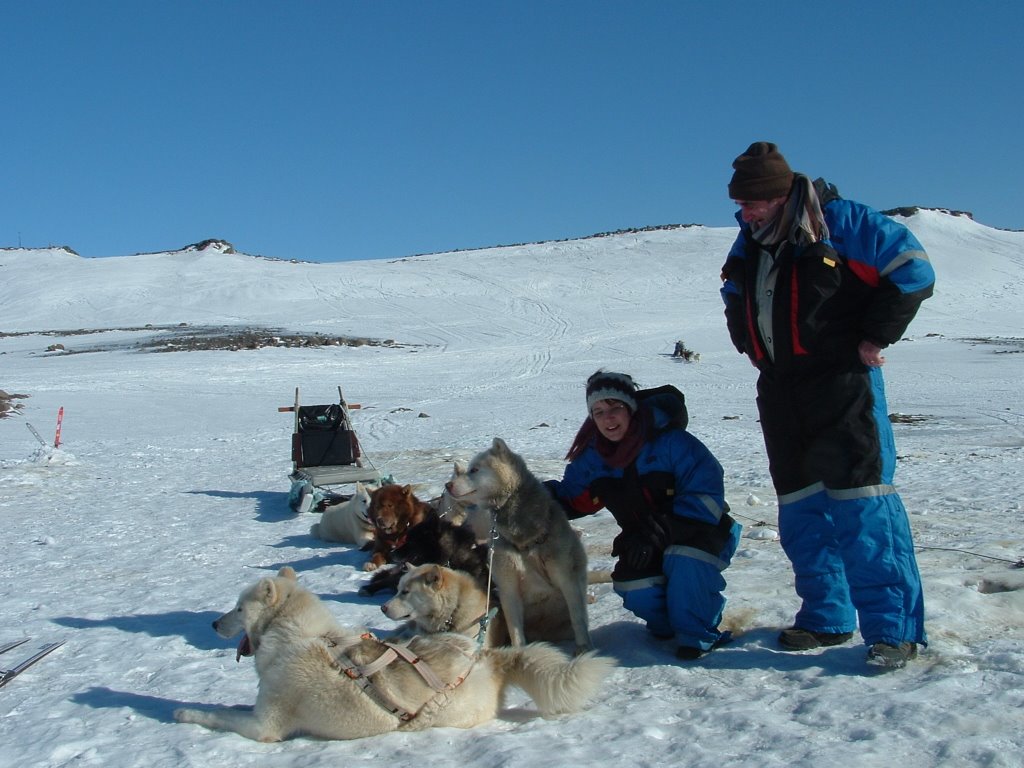
So on Sunday we picked up a hire car - left hand drive Renault station wagon at a cost of $160 for the day! We had arranged to go dog sledding on a glacier which was 180kms from town. After giving Carol several very bad moments by nearly sideswiping parked cars, and mounting the footpath on her side of the road, I finally got the hang of it and we drove with no further mishaps.
We eventually arrived at the track which led from the main road up to the glacier - and when I say track I mean goat track. But by being very careful we manage to avoid the larger rocks, crossed a couple of ice and snow patches and finally (and thankfully) arrived at the site. There were dozens of 4wds parked there with trailers carrying snowmobiles which seemed to be the most popular sport.After as short wait we saw a teams of dogs pulling a sled hurtling down the hill towards us so we knew were in the right place.
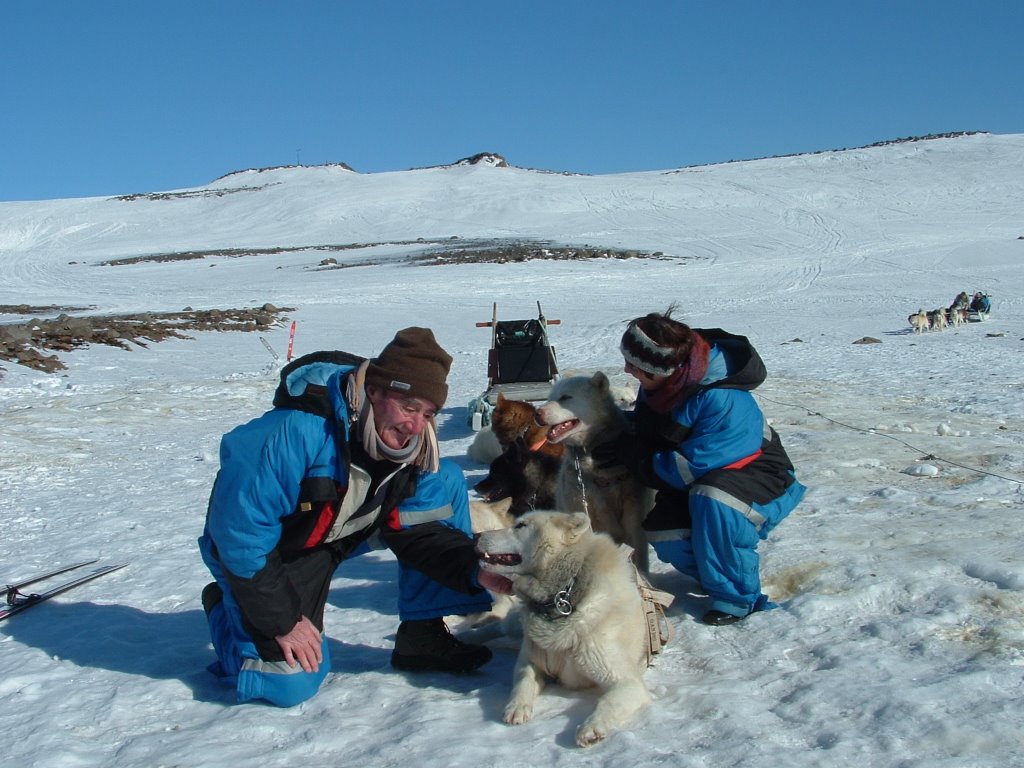
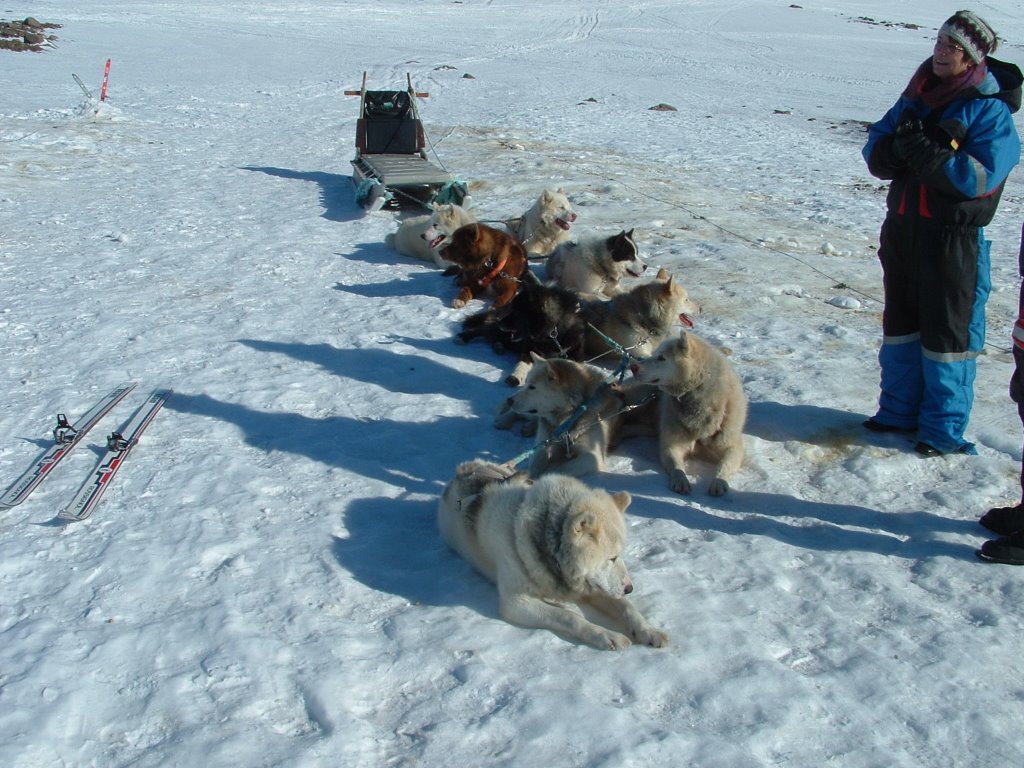
Having been kitted out with zipper overalls and introduced to the dog team, and the leader "Gandi" in particular, we took our seat on the sled and the "Musher" shouted out and we were off. The dogs are not Huskies, which the musher assured us were the racehorses of dogs. Ours were Greenland sled dogs bred by the army in Greenland as pure working dogs and capable of sustained power. We went up quite a few slopes, and while the dogs only walked they kept us moving. Going downhill was exhilirating and the musher put ropes under the sled to act as brakes so that we didn't run up the dog'd bums!!At the top of the glacier we had a break to take in the panoramic views of mountains and out across the Atlantic ocean which shimmered in the background. Too expansive to attempt to photograph. While resting we were encouraged to pat and fuss with the dogs who acted like great big sooks. Then it was back on board and off to the base. In all we had about an hour on the trip and it was a once in a lifetime experience. At the base we had to again fuss over the dogs as a way of thanking them for their efforts.
When finally got back to Sunna our host booked a table for us at a fish restaraunt that she recommended. It was superb, and although Carol was a bit tired and couldn't eat all her meal, yours truly wolfed the lot after his exhaustiing driving experie nce!!
The next morning I had to return the car and had been advised to fill it with petrol rather than pay the hire compa nys extortionate price. In some trepidation I drove off looking for a servo and took a wrong turn finishing up on the main highway going out of town! Of course I hadn't taken a map with me and became more than a little stressed as it was peak hour. Thankfully our guesthoouse was next door to the Cathedral and I spotted it's tower and headed on all sorts of streets until I arrived back at Sunna. Then I started out again determined to make straight for the hire company and bugger the expense. I was also a bit worried because we had managed to shed a wheel trim somewhere somehow(hitting the footpath Len?). Blow me down when I got there I told them I had not filled up - so they asked me if I would like a driver to take me back to the guesthouse and fill up with petrol on the way!!Sheer heaven - and they didn't even check out the car!!
And so our day of departure. We had booked a tour which took us to the Blue Lagoon where we were to have a couple of hours relaxing iin the Lagoon before being picked up again and taken to the airport. The Blue Lagoon is a geothermal pool with milky blue warm water and a sandy bottom extending over a considerable area. After we had changed into our bathers, we did a quick dash from the change rooms into the pool and stayed there basking in the warm water. Carol applied the silica mud to her face and her complexion has never looked better!
Then it was the airport where, suprisingly we had the best value meal of our stay -most unlike an airport. A fitting finale to a truly wonderful visit.
Sorry about the photos all being up at the top of this blog - I can't seem to get them into places that would be more appropriate.


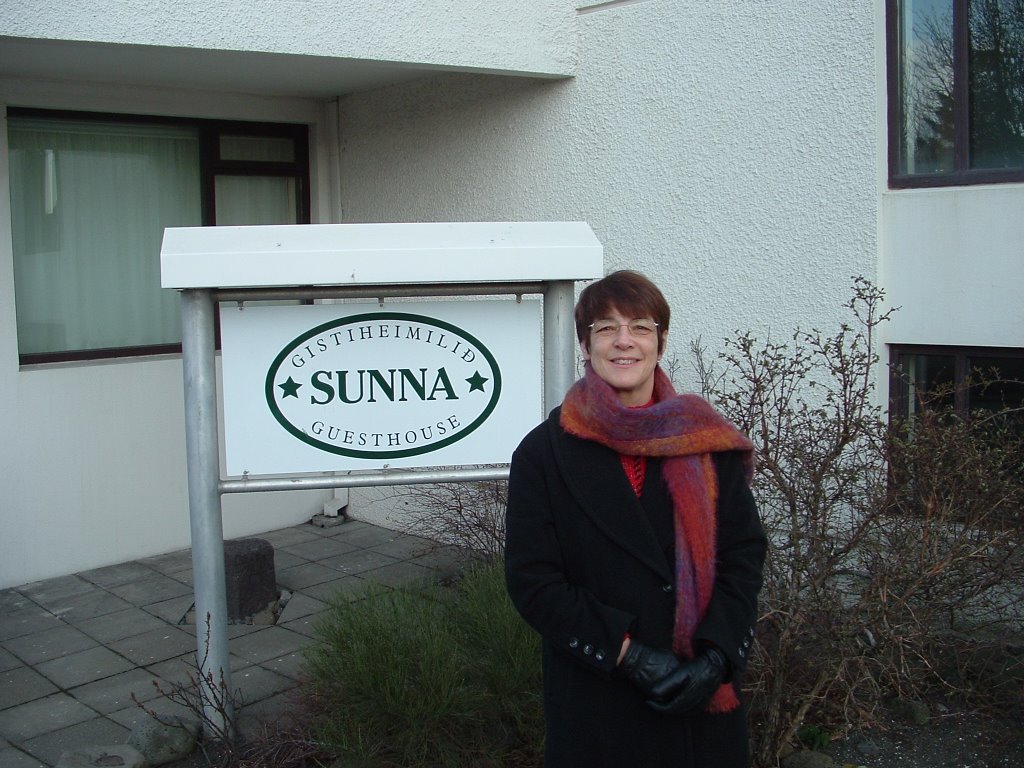 backdrop Reykjavik.We stayed in a guest house Sunna which was great and the family who run it could not have been more hospitable making bookings for us in Icelandic- a language which is absolutely foreign!
 This amazing area covers some 600 square miles and was originally a complete swamp with a few scattered areas where the land was high enough to support a settlement. Ely and Ramsey were both islands in the distant past . The photo above left is of the Holme Fen Posts -this pole was buried in1851 so that it's top was level with the ground at the time.This is now 13 feet above the ground caused by the gradual subsidence of the land due to the extensive drainage of the Fens and the shrinkage of the peat when it dried out. The photo above right is of a tyical canal or drain which supports the total system of draining water to the sea. Surrounding land is usually lower than the canal or other waterwat levels which means that water has to be pumped up from the land into these waterways when flooding occurs.
Ramsey Forty Foot is just a few minutes away from Ramsey and the name comes from the fact that the drain at this point is 40 foot wide!.
 Picture at right shows a typical road and canal which goes straight for several miles and is typical of the scenery in the area.
The Romans came to the Fens in 43 AD and established forts in the area. They did some work on drainage building canals,embankments and sea defences.But they left England in 410AD and by the 4th century all traces of Roman occupation had disappeared and the Fens reverted to floods and marshes.
Then there were the Viking invasions in the 8th century,the introduction of religious orders (and the commencement of building abbeys) and the Norman invasion of the 11th century.It was during this latter period that the building of Ely and Norwich Cathedrals was commenced.
In 1621 a dutchman Cornelius Vermuyden was brought to England with the brief to rehabilitate the Fens which he commenced to do by employing hundreds of labourers to dig massive canals, and to straighten the watercourses of several rivers with the aim of directing water flow more rapidly to the sea. In1637 the project was adjudged complete. However nature was not be so easily defeated, and severe rain and snow soon proved his plan needed more work.So in 1649 work started again with the extension of cuts and drains and the creation of the Ouse Washes a 4700 acre storage resevoir designed to hold flood waters until it was safe to release them into the river system.This was completed in1656 and the drainage of the Fens again declared finished. Not to be -the floods returned with a vengeance and it became apparent that Vermuyden had overlooked the nature of the land. The area that had been drained was 100% peat and peat is 90% water,and the draining had caused the peat to shrink and hence the land sank.
Windmills were introduced to pump the flood waters up to the now elevated waterways, but with limited success, and it was not until firstly, diesel powered and subsequently electric pumping capacity was introduced that things gradually improved. Even so there were catastrophic floods in the 20th century and millions of pounds were spent on Flood Control Strategy to reach the present day position. Even now there are still risks of flooding (there were major floods in1998-2003) and that, together with the continuing shrinkage of the land, poses ongoing problems for the Fens. In some places farmers are now ploughing into the clay subsoil where erosion has stripped the topsoil.
But a fascinating place to have lived in.


We had an email from Nancy Young a neighbour in Toowoomba wih the suggestion that we might visit Colchester and Constable country where her sister Sue (pictured above with Carol)lives in a small village called Langham. We had met Sue when she visited Toowoomba,so I gave her a call and she was more than pleased for us to call on her. The drive down was all major highway and took us past Stanstead Airport which was useful as we are flying out from there for Iceland next week. Colchester is the oldest Roman settlement in England and we could easily spend a day touring around there. We did visit the magnificent 11th century castle which is in remarkable condition for it's age. Colchester itself has survived a Norman invasion, a siege during the English civil war (Oliver Cromwell and that lot) and an earthquake in the 19th century. We also visited the ruined Priory buildings an original monastery from the 12th century - which although a real ruin was well depicted in it's original form with imaginative illustrations at the site.
We drove out to Langham, Navigator Carol doing another superb bit of work with the occasional blast at the driver -"I said take the second left you ******* ignoramus -get a bloody hearing aid" All in good fun of course!!
Sue lives in a lovely house set on an expansive garden block just off the motorway. We had a drink and Sue rang David and Nancy to have a brief chat. That's when we found out that David's planned itinerary for their visit in May/June included a visit to us at Ramsey during the time that we plan to be in Norway! The school half term is the only time we can get to Norway to see Sarah and Baard so we are waiting to hear what alternative plan can be made.
Langham is in the centre of the district know as Constable country. The famous Landscape artist was born here and painted his memorable works around this area .We drove to Dedham a glorious village where we visited the church which was a lot larger than the usual village church due to the village having been the home of a large weaving industry. The photos above are of Flemish weavers cottages which have been maintained and still comfortably habitable. After a pint of ale in the old pub we took off for Flatford.
This is a National Trust project commemorating Constable's life, and needs really to be visited in dryer weather as walking is de rigeur. However we managed toget a very good idea of this beautiful part of England.The top left photo is of Willy Lott's house a farmhouse built about 1600 and part of the National trust.
Back to Sue's for a delicious late lunch. While feeding ourselves it started to snow and actually just settled onto the ground before stopping thank heavens - driving on snowy roads is something my navigator is reluctant to trust me with!
Sue gave us directions for a quicker route home and we made it back in excellent time having had a most enjoyable day.
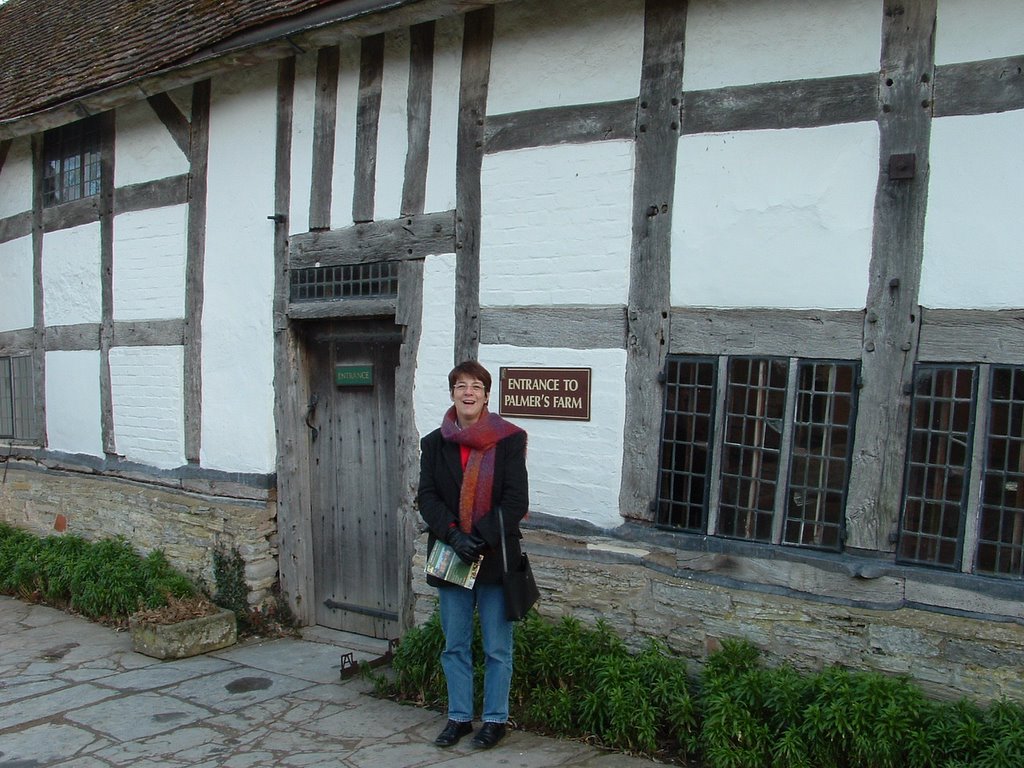


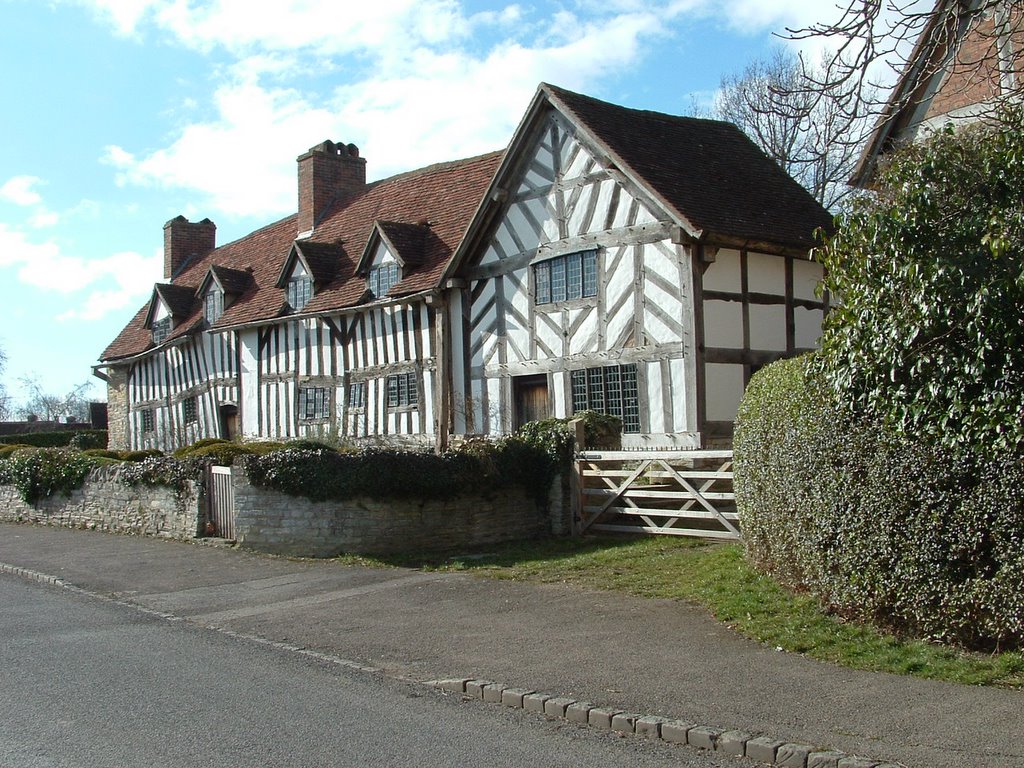
We decided to get an early start on Sunday and go across to Stratford on Avon which is 93 miles west of here. AS usual Carol navigated with consummate skill and we made the trip in just 2 hours. With lots of good signage we soon found Anne Hathaway's cottage and paid 26 quid for a ticket which gave us access to the five major sites celebrating William Shakespeare.
The cottage (picture top right) was in incredible condition for a 16th century building, and a guide their gave an interesting account of the lives if Bill and Anne. Bill was only 18 when he married Anne (who was 26 and 3 months pregnant!) so he was not just a good writer!. The two storey cottage contained several original items of furniture and was set in a superb garden.
Next stop was in the City centre, with plenty of parking available. We visited Shakespeare's birthplace and the exhibition of his liffe and works, all very well presented and most interesting.
The city itself was picturesque and very tourist orientated. We went down to the River Avon and watched a canal boat go through the lock which reminded us of our Murray River houseboat adventure some years ago. The wind was very cold here and we wandered about trying to decide where to have lunch,but finally got the car and drov e to the Arden cottage and farm which was about 4 miles from Stratford. We had a light lunch here and then went to see the very old house that Shakespeares mother had lived in until she moved to Stratford and married Bill's father.Until five years ago it had been assumed that the larger cottage (pictured bottom right above) had been their home, but an investigation turned up evidence that the actual cottage was a little further away on the farm property. The cottage had been inhabited by one family (not Ardens) for many years and was lived in until the 1970's!!
The larger cottage is, as can be seen, in a pretty decrepit condition, but can be inspected inside and one casn only goggle at the massive old wooden beams that supported the roof.The floors are very unevendue to sagging here and there, but again quite remarkable for being 500 years old. The farm itself is interesting and includes a falconry. We were lucky enough to be in time for a flying displpay by a European Owl (photo above). This was one of several owls,falcons,hawks and kestrels which are kept there. The young lady who was running the show was full of interesting infomation and told us that most of the birds had been bred in captivity.
The other fascinating building was a dovecote, a large rotunda shaped building inside which the walls contained hundreds of recessess in which the doves lived. Apart from suppplementing the diet, these birds droppings were regularly scraped up and used as fertilizer.
And so we turned for home,this time managing to geta bit lost and ending up going through Warwick and almost into Leicester due to missing an exit on the Motorway - it didn't make much differencce however. It was still daylight when we stopped at the Admiral's Arms at Holme for a much needed pint for me a mulled wine for the navigator. A great day.
